


Table of Contents
Running a marathon is about much more than putting one foot in front of the other for 26.2 miles. Here's a guide to Marathon Fuel and all you need to know.
Your training, pacing and footwear all play an important role, but marathon fuelling and hydration can have a huge impact on how you feel during the race and how well you recover afterwards.
Having a fuelling strategy in place can help you maintain your energy levels, delay fatigue and give you the best chance of finishing your marathon feeling strong. From your pre-race meal to carbohydrates during the run and recovery nutrition after the finish, here's what you need to know about eating and drinking for a marathon.
Why Is Marathon Fuelling So Important?
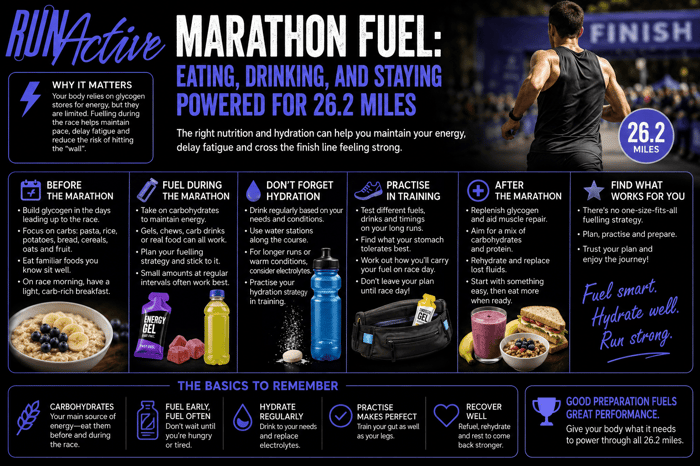
During a marathon, your body relies heavily on carbohydrates for energy. Your muscles store carbohydrates as glycogen, but these stores are limited. As the miles build up, those energy reserves gradually become depleted.
This is where marathon fuelling becomes particularly important. Taking on carbohydrates during the race helps provide your body with an additional source of energy, helping you maintain your pace and reduce the risk of hitting the dreaded "wall".
You don't want to wait until you feel exhausted before you start fuelling. By then, your energy levels may already have dropped significantly. Instead, think of fuelling as something you do consistently throughout the race.
What Should You Eat Before a Marathon?
Your pre-marathon nutrition starts well before race morning. In the days leading up to your marathon, focus on eating plenty of carbohydrate-rich foods to help maximise your glycogen stores.
Good options include pasta, rice, potatoes, bread, cereals, oats and fruit. You don't need to completely change your diet – the key is making sure you're getting enough carbohydrates while choosing foods that you know your stomach tolerates well.
On race morning, aim for a familiar pre-marathon breakfast that provides carbohydrates without being overly heavy. Porridge with banana, toast with jam or cereal with fruit can all work well.
Avoid experimenting with new foods on race morning. The marathon is not the time to discover that a particular breakfast doesn't agree with your stomach!
Fuelling During the Marathon
For most runners, taking on carbohydrates during a marathon is an important part of maintaining energy levels.
Running gels are one of the most popular ways to fuel during a marathon because they're compact, convenient and easy to consume while running. Other options include carbohydrate drinks, chews or familiar foods, depending on what works best for you.
The important thing is to plan your marathon fuelling strategy before race day. Rather than waiting until you're hungry or tired, establish when you're going to take your fuel and stick to your plan.
Many runners find it useful to take smaller amounts at regular intervals rather than consuming a large amount all at once. However, everyone's nutritional needs are different, so your strategy should be based on what you've practised during training.
Don't Forget Hydration
Marathon hydration is just as important as fuelling. You lose fluid through sweat while running, and the amount you need can vary considerably depending on the weather, your pace and your individual sweat rate.
Start the race well hydrated, but avoid drinking excessive amounts simply because you're worried about dehydration. During the marathon, drink regularly according to your needs and make use of the water stations provided along the course.
For longer runs, particularly in warm conditions, electrolytes can also be useful. Sweat contains sodium and other electrolytes, and replacing some of these losses can form part of an effective hydration strategy.
As with nutrition, practise drinking during your training runs so you know what your body can comfortably handle.
Practise Your Fuelling Strategy in Training
One of the biggest marathon fuelling mistakes is leaving your nutrition plan until race day.
Your long training runs are the perfect opportunity to experiment with marathon gels, sports drinks, carbohydrates and hydration. Try different products and timings to see what works best for you.
This is particularly important because everyone's stomach responds differently when running. Something that works perfectly for one runner might cause problems for another.
Practising your fuelling also gives you the opportunity to work out how you'll carry your gels and drinks during the race, rather than trying to solve the problem on marathon morning.
What Should You Eat After a Marathon?
Your fuelling doesn't stop when you cross the finish line. Post-marathon nutrition plays an important role in recovery.
After 26.2 miles, your body's energy stores will be depleted and your muscles will need to repair themselves. A combination of carbohydrates and protein is a good starting point.
Easy options include a protein smoothie with fruit, yoghurt and granola, a chicken and rice meal, or a sandwich alongside some fruit. You should also continue replacing fluids after the race.
You don't need to eat immediately if you feel unable to stomach a full meal. Start with something easy to digest and then have a more substantial meal when you're ready.
Find What Works for You
There is no single perfect marathon fuelling strategy. Your body, running pace, training experience and personal preferences will all influence what works best.
The key is to plan, practise and prepare. Experiment with your nutrition during long runs, find the gels or carbohydrate sources that agree with you, practise your hydration strategy and establish a pre-race meal that you know works.
When race day arrives, you'll have confidence in your fuelling plan rather than relying on guesswork.
Good marathon preparation isn't just about the miles you run in training – it's also about giving your body the energy it needs to run them. With the right combination of carbohydrates, hydration and sensible recovery nutrition, you can give yourself the best possible chance of staying powered for all 26.2 miles and crossing the finish line strong.